HD Sports: Sheffield’s Quiet Giant of the Ice
Hidden away at the very end of Rutland Way in Neepsend — just past the bar Church — is a factory that most Sheffielders would walk past without a second glance. From the outside, HD Sports looks like countless other units scattered across the city’s backstreets. Inside, however, is a world leader in a craft many people don’t even realise happens in Sheffield: the making of ice skates.
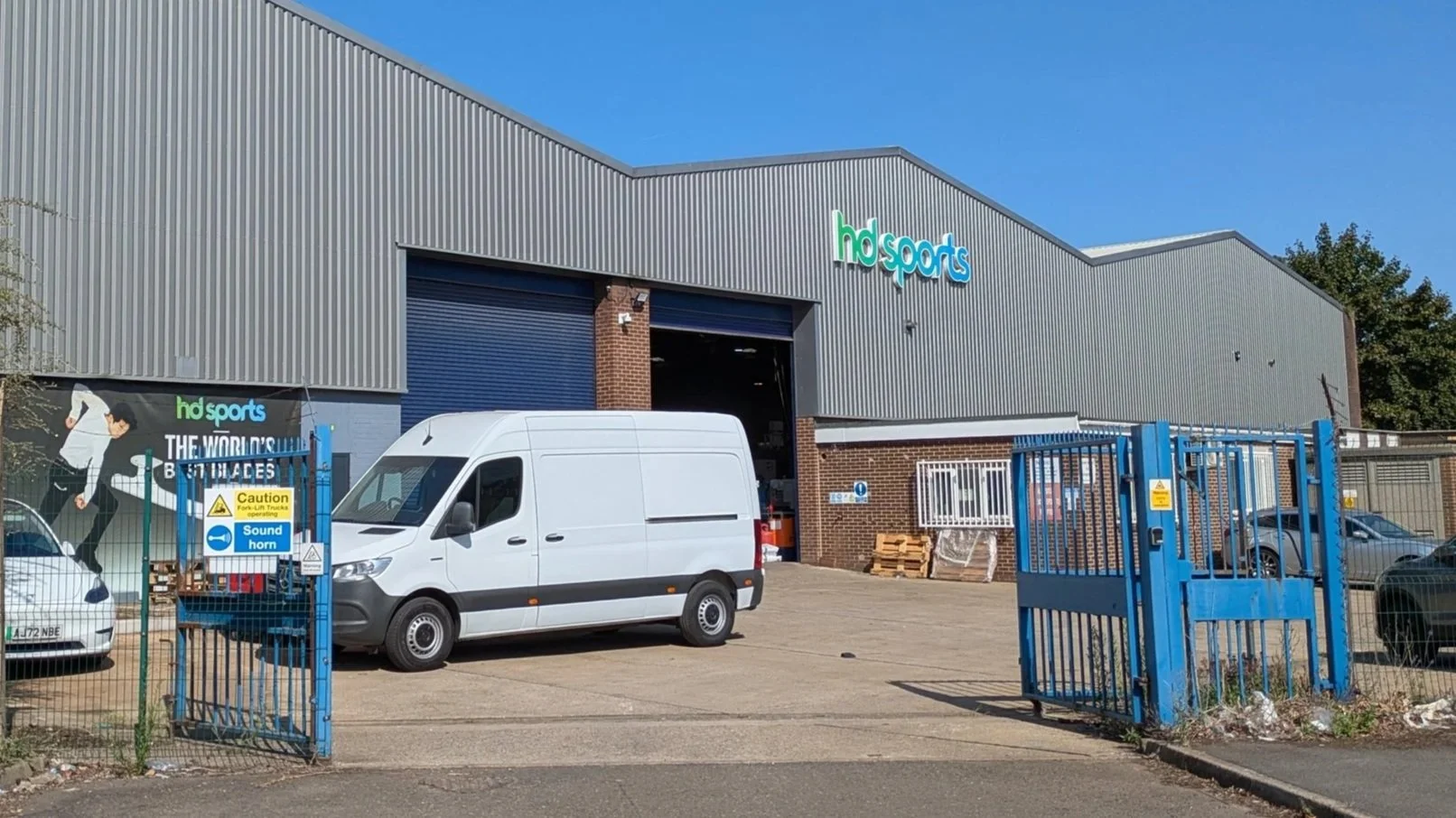
HD Sports on Rutland Way in Neepsend, August 2025. Photo: Anders Hanson
Not just any skates, either. These are the blades worn by around 70% of competitors at the World Figure Skating Championships, shipped to 51 countries, and trusted by elite athletes. And yet, despite all this, HD Sports remains one of Sheffield’s most quietly successful manufacturers.
Last year, I had the chance to visit the factory and was given a tour by its chief executive, Tom Cantwell. What I found there was a story that stretches back more than three centuries, and one that is deeply woven into Sheffield’s long tradition of engineering.
From royal toolmaker to sheffield institution
The story of HD Sports begins in 1696, when Sheffield engineer and toolmaker John Wilson first established a reputation for crafting high‑quality ice skates. His skill was recognised at the very highest levels: a pair of his blades was made for King William III, marking the start of a long association with royalty. By the 1840s, as ice skating grew fashionable across Europe, Wilson was again supplying the royal household—this time producing skates for Queen Victoria and Prince Albert, whose early courtship famously included skating together.
This royal patronage helped cement the firm’s reputation, and the company flourished as skating evolved from a winter pastime into a competitive sport. Much of this transformation was driven by Jackson Haines, the American skater whose balletic style reshaped figure skating. By the time the first international championships were held in St Petersburg in 1896, Sheffield was already producing blades for a rapidly expanding global market. During this period, the John Wilson business became part of Robert Sorby & Sons, another Sheffield firm with a long and respected manufacturing lineage.
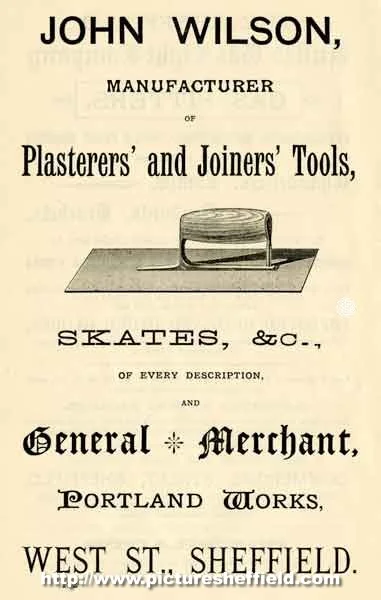
Advertisement for John Wilson in Sheffield and Neighbourhood by Pawson & Brailsford, 1889. Source: Picture Sheffield, Ref: y12151
The John Wilson brand was eventually absorbed into the growing engineering enterprise of Hattersley & Davidson, founded in 1890 by Charles Hedley Hattersley and Albert Davidson. Although they began as general engineers, Hattersley & Davidson soon established themselves as leading suppliers of machinery to the mining industry.
The company operated from several sites across Sheffield, including Arundel Street and later Norfolk Street, where the Mercure St Paul’s Hotel now stands. A striking early‑1900s photograph shows a colliery wheel mounted on the roof of their premises, proudly advertising their expertise in shafting pulleys and belting fittings. One of their buffing machines survives today in Kelham Island Museum.
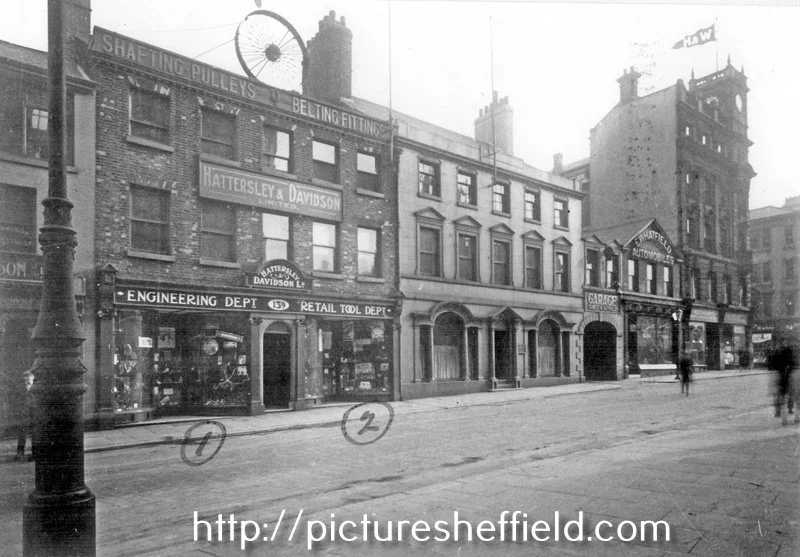
Hattersley & Davidson's premises at 139 Norfolk Street, c. 1920-1939. Source: Picture Sheffield, Ref: s18630
Hattersley & Davidson expanded steadily through the early 20th century, taking on the Cobnar Works in Woodseats, producing mortars during the First World War, and in 1923 acquiring the assets of Robert Sorby & Sons after that firm went bankrupt. This acquisition brought the John Wilson brand firmly into the Hattersley & Davidson stable, where it continued to grow. Fittingly, both John Wilson and Albert Davidson now share the same final resting place in Norton Cemetery on Derbyshire Lane.
Like many Sheffield firms, the company faced difficulties in the late twentieth century. An attempted move to Rotherham proved unsuccessful, and a troubleshooter was eventually brought in to stabilise the business. By the 1980s the company had returned to Sheffield, finding a new home in Attercliffe. A major development followed in 1997 with the acquisition of Mitchell & King (MK Blades), a respected skate manufacturer based in Slough. The two brands—John Wilson and MK Blades—now sit side by side under the HD Sports umbrella, each with its own loyal following among skaters.
In 1998 the company moved to its current premises in Neepsend, continuing Sheffield’s centuries‑old association with precision steelwork. By 2008 the engineering arm had closed entirely, and the firm—now trading as HD Sports—focused solely on ice skates.
One of the more surprising chapters in the company’s history came when it was bought by Nike for a brief two‑year period. When the sports giant realised that competitive figure skating was unlikely to become a billion‑dollar industry, they sold the business back to the management team. Then, in 2014, two American entrepreneurs with a passion for figure skating purchased the firm and brought in Tom Cantwell to run it, ushering in the modern era of HD Sports.
Inside the Factory: Where Tradition Meets Robotics
Walking through the factory was a fascinating experience. Sheets of steel—sadly no longer Sheffield steel, as the specific grade they need simply isn’t produced here anymore—arrive in two main weights depending on whether the blades are destined for elite athletes or the mass market.
From there, the process is a blend of centuries‑old craftsmanship and cutting‑edge technology:
Cutting the blade using precision templates
Heat treatment and shaping
Machining, grinding, buffing, and greasing
Removing striations and rough edges
Hand‑finishing to achieve the exact feel skaters demand
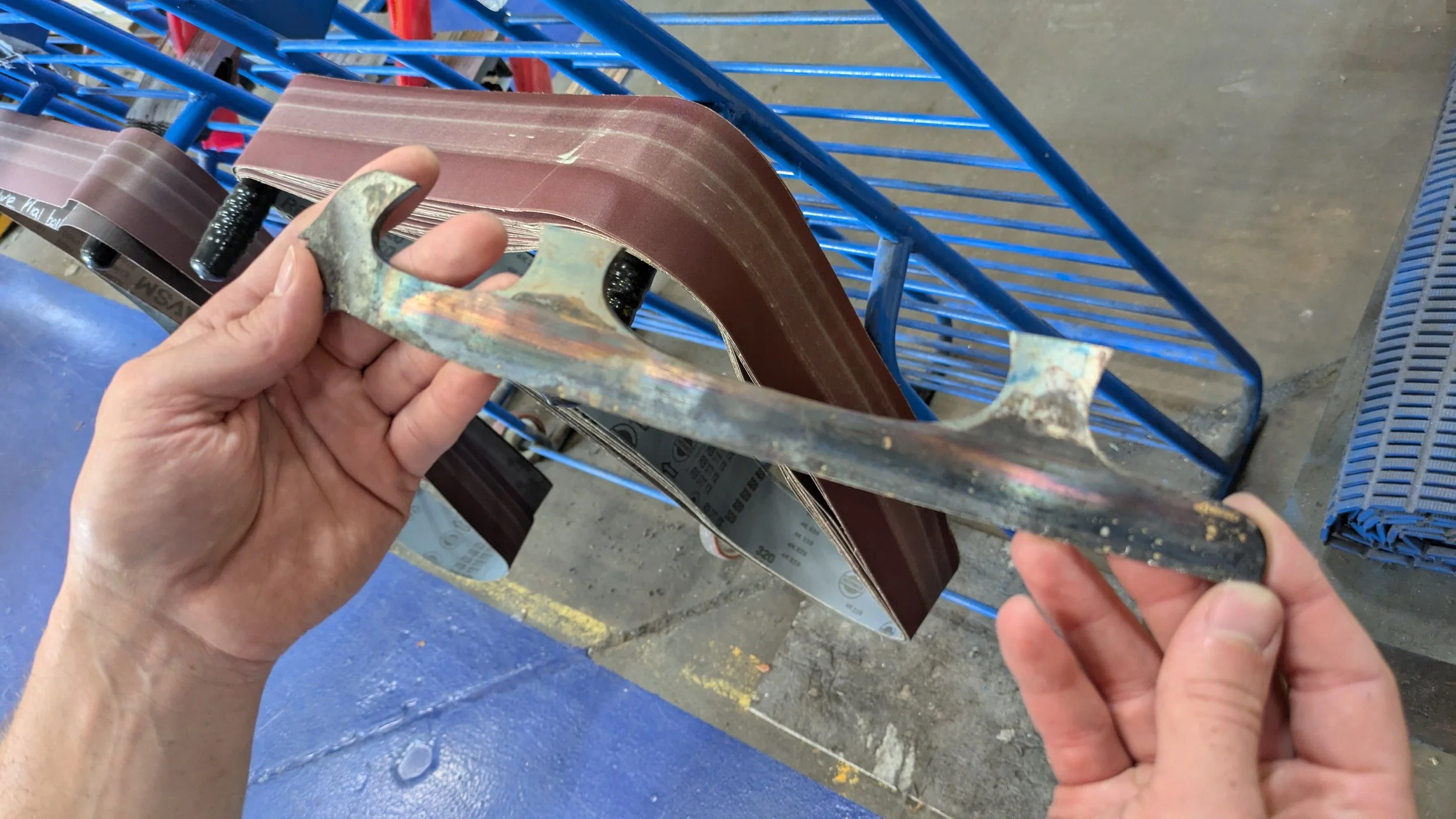
An ice skate at its early stage where the shape has been cut out but before all the work goes in to buffering and refining it into the finished article. Picture: Anders Hanson
HD Sports is the only company in the industry to use industrial robots in blade manufacturing—a development that was inspired by a visit to the University of Sheffield’s Advanced Manufacturing Research Centre (AMRC) where they heard from Jim Heley of A3L about how small to medium enterprises can adopt the use of robotics in manufacturing.
Despite the robotics, much of the work remains done by hand. Watching the team shape, polish, and inspect each blade, I was struck by how much precision is required. The forces that go through a skate blade during a jump are enormous; they must be strong yet incredibly thin, engineered to precise tolerances.
One of the memorable moments of my visit came when I was shown a pair of ice skates supplied by John Wilson to Queen Victoria and Prince Albert. The company still owns them, and they are extraordinary objects: wooden‑soled skates carved in the shape of elegant swans, a perfect blend of Victorian craftsmanship and whimsy.
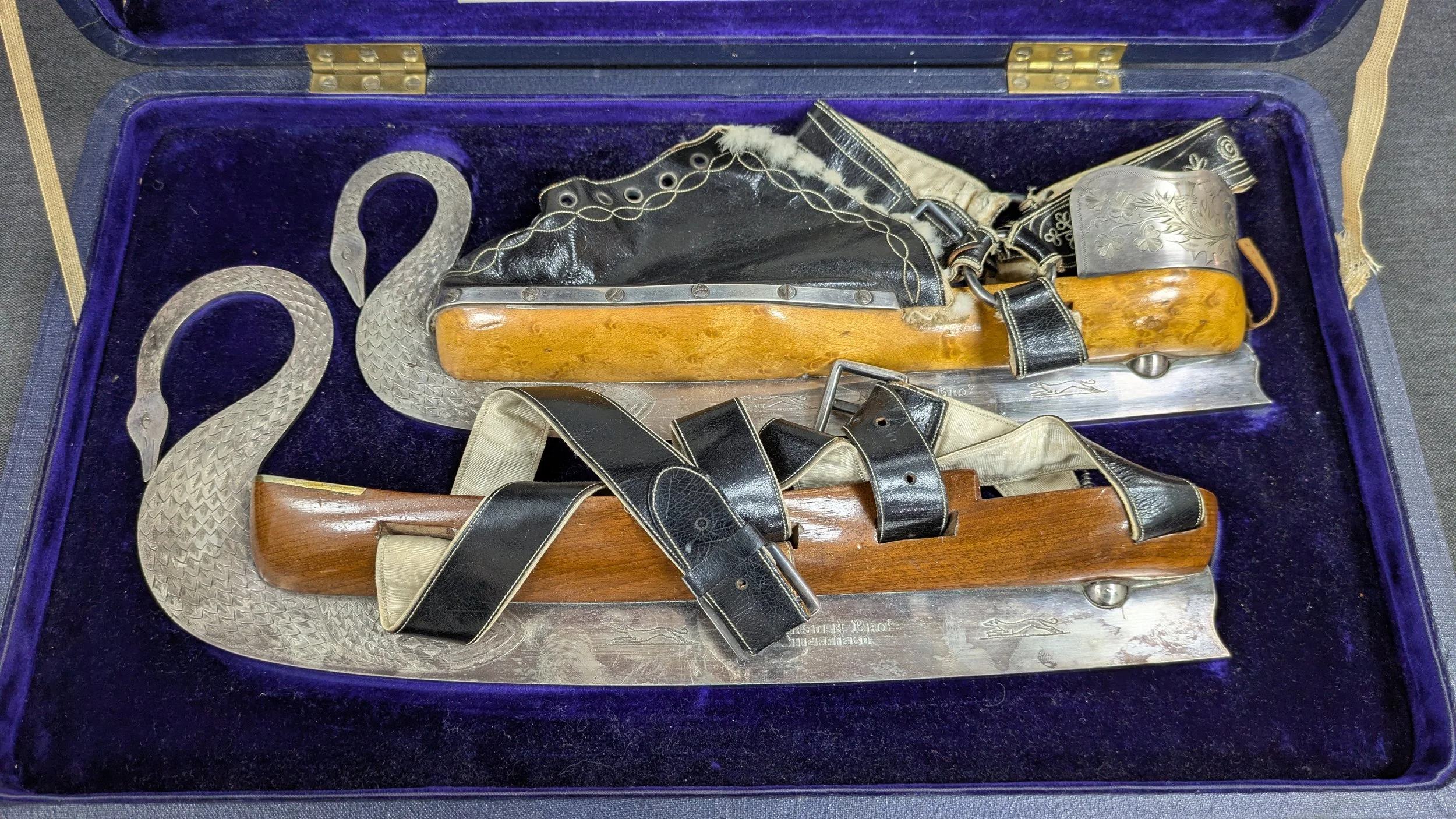
The swan ice skates supplied by John Wilson to Queen Victoria and Prince Albert in 1840. Picture: Anders Hanson
Custom Blades for the World’s elite
Although HD Sports produces blades for general sale—mostly for serious skaters rather than casual beginners—they also create fully customised blades for the world’s top figure skaters.
During my visit, I was shown several sets of blades being prepared for dispatch to elite athletes. Each pair was engraved with the skater’s name, and although I’m no expert in the sport, I was assured these were some of the biggest names in figure skating today.
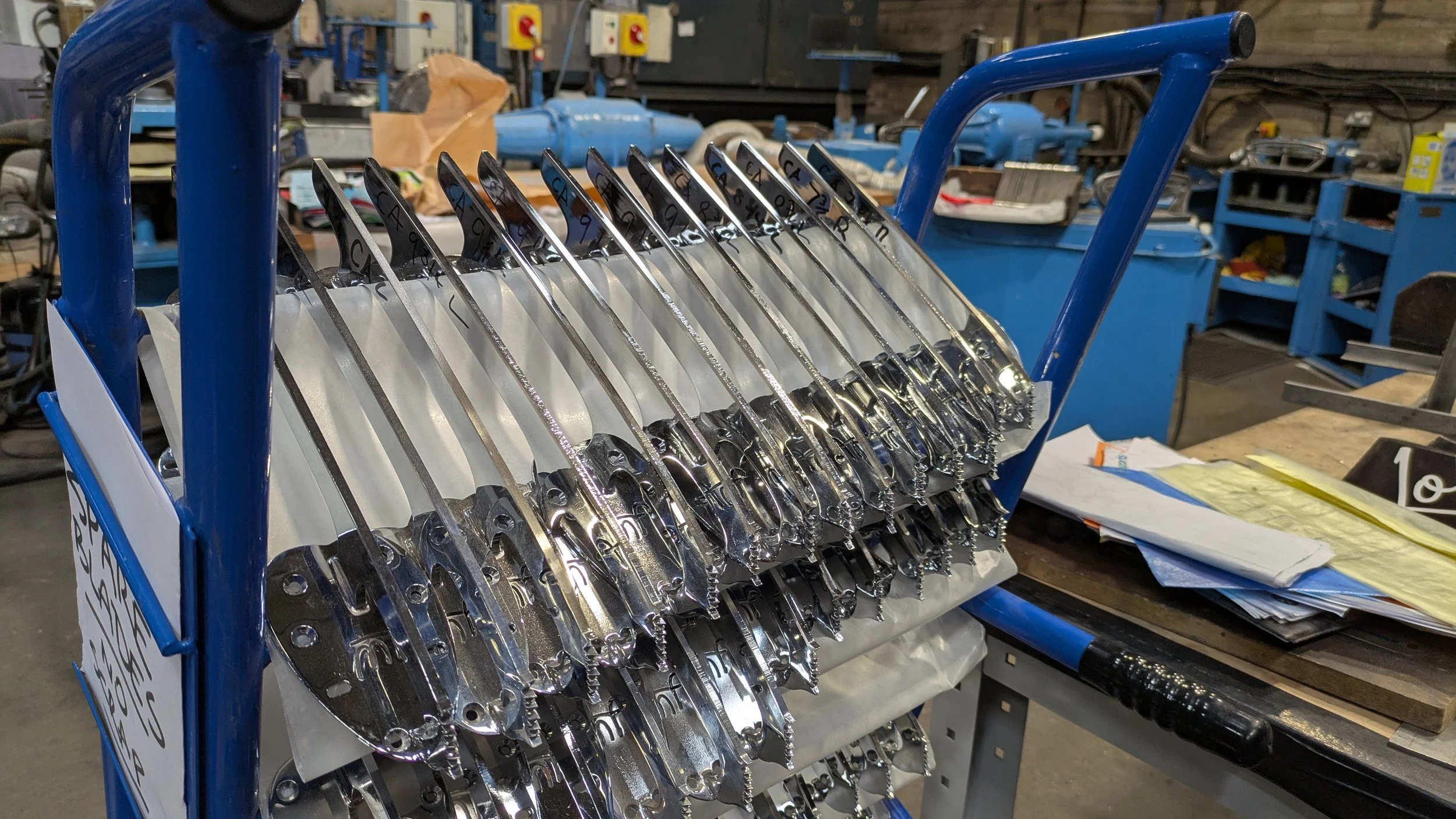
Racks of blades towards the end of the manufacturing process before they are dispatched to boot manufacturers and clients. Photo: Anders Hanson
A Modern Sheffield Success Story
HD Sports is also one of Sheffield’s pioneers of the four‑day working week—four days’ work for five days’ pay. It’s a controversial idea in some industries, but has worked well for HD Sports who have found it a huge success.
Since the company was purchased by American investors in 2014, the workforce has grown from 16 to 40, with over £2 million invested in new infrastructure, and an expansion into additional premises. They have also acquired a boot manufacturer, with ambitions to make HD Sports not only the best at producing blades, but also the best in the world at producing the whole ice skate with the boot and blade combined.
As Sheffield prepares to host the 2026 European Figure Skating Championships at the Utilita Arena, it feels like the perfect moment to shine a light on this remarkable company. HD Sports is a reminder that Sheffield’s engineering heritage isn’t just something preserved in museums or remembered in old photographs. It’s alive, evolving, and—quietly, in a factory at the end of Rutland Way—still shaping the world.

Advertisement on the Sheffield Winter Gardens, for the International Figure Skating European Championships taking place in Sheffield from 13-18 January 2026. Photo: Anders Hanson
For me, as someone who spends much of his time guiding people around Neepsend’s industrial past, HD Sports is one of those stories that always fascinates people. There’s always a moment when I tell people what is in this very anonymous looking building that leads people’s eyes to widen when they realise they had no idea that Sheffield was in this industry, never mind a world leader.
sources
Here are some of the main sources I used for this article:
Visit to HD Sports, 15 August 2025
Geoffrey Tweedale, Directory of Sheffield Tool Manufacturers 2018. Entries for Hattersley & Davidson, Robert Sorby & Sons Ltd, and John Wilson
White's Directory of Sheffield (various years)
Kelly's Directory of Sheffield and Rotherham (various years)
Cobnar Works, This is Woodseats, https://thisiswoodseats.co.uk/woodseats-history-trail/cobnar-works/
Wikipedia entries for figure skating and Jackson Haines
Roy Blakey's Ice Stage Archive blog, 'Jackson Haines: The Father of Figure Skating' https://www.icestagearchive.com/jackson-haines-the-father-of-figure-skating/
John Wilson website: https://www.johnwilsonskates.com/
Insider Media, 'Sheffield skate blade manufacturer bought by US investor', 10 October 2014: https://www.insidermedia.com/news/yorkshire/125359-